.png "The Vested Group | NetSuite Solution Provider Partner | NetSuite Consulting | NetSuite Support")

As a business owner, you know that having a clear plan is crucial for the success of any project. This is especially important when implementing an enterprise resource planning (ERP) system. Oracle's NetSuite is an ERP that can boost your company's efficiency and help you improve operations. While setup may seem challenging at first, breaking it into phases will help you get it running and improve your business in no time.
In our NetSuite implementation guide, we'll break down each phase of the process. You'll learn how to set goals at each step and best practices for a successful launch.
How Long Does a NetSuite Implementation Take?
The NetSuite implementation process, from start to finish, can take up to three months. Keep in mind that the final time can depend on the size of your company and the scope of the project. For instance, the more complex your business requirements are, the longer it may take to integrate NetSuite into your company. Customization requirements and the volume of data that need to be migrated can also add time to the overall process.
While it might seem like a long time, it will take far less than most types of ERPs, which can also be more complicated to implement. Setting reasonable goals will keep you on track for a successful launch. Also, as you transition to NetSuite, remember that the result will be well worth the time you spend implementing it.
Your Pre-Implementation Checklist
Before a NetSuite ERP implementation, there are a few tasks to complete to make it as smooth as possible. Follow this checklist before you get started:
- Assemble and define team roles: It's essential to assign specific roles to the individuals who will be involved in the implementation. This way, you have a clear path to the finish line, knowing who's taking care of what. Roles can include an executive sponsor, or the CFO, to champion the project, a dedicated project manager to oversee internal tasks, or subject matter experts from each department who understand the day-to-day processes.
- Document and prioritize your business processes: Document your current workflows and use that to create a tangible playbook. Hand it to your implementation partner to speed up the discovery phase. For example, you might categorize processes as “must have,” “nice to have,” and “can be replaced by the standard NetSuite functionality.”
- Conduct a data health and cleanup audit: Start auditing your existing data, searching for any inaccuracies, duplicates and obsolete information. Cleansing your data early on can prevent delays and complications during the data migration phase.
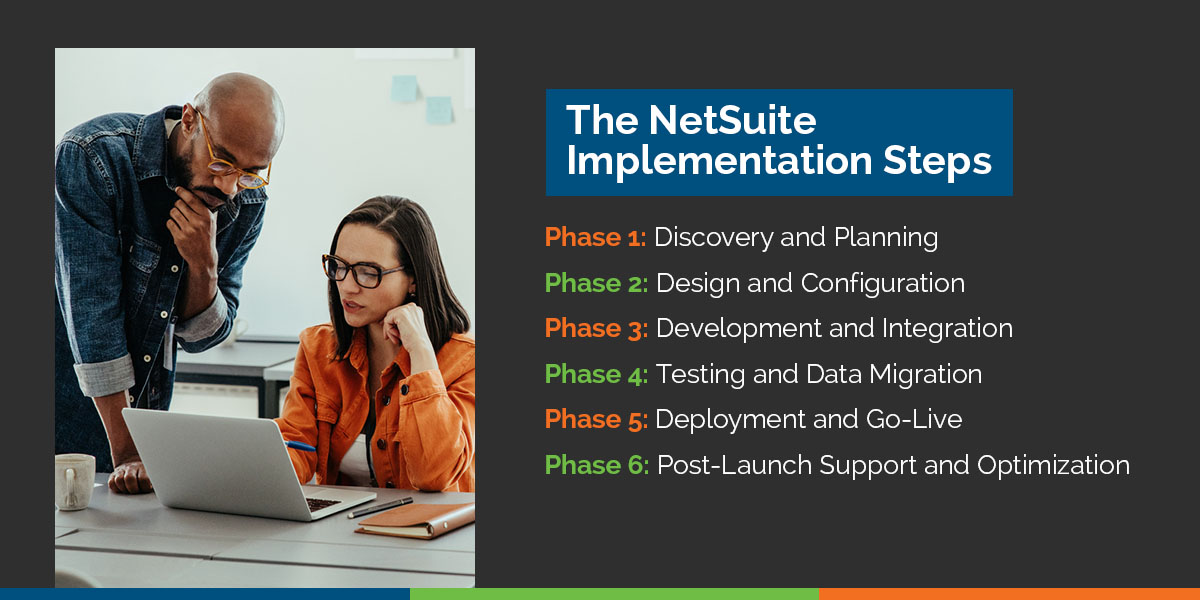
The NetSuite Implementation Steps
Your NetSuite implementation project plan will consist of several key stages, each with its own goal and tasks. Here's a breakdown of these steps so you can ensure a smooth launch:
Phase 1: Discovery and Planning
The first phase is all about building a strong foundation for NetSuite. At this point, you'll begin scoping sessions to establish your goals and outline the remaining phases. You'll conduct an in-depth review of your business to determine your needs. This will involve discussing items like software licensing and design requirements. Finally, you'll create a detailed project plan and NetSuite implementation timeline.
Phase 2: Design and Configuration
In this phase, you'll translate your business requirements into a functional system design. You'll configure NetSuite's standard features to precisely match your needs. At this stage, your partner will ensure the best alignment with your business goals. They'll meticulously plan any customizations you need and integrations with your existing systems. Ultimately, phase two is about mapping a way to enhance the efficiency of your current business plans within NetSuite.
Phase 3: Development and Integration
Phase three is basically the building phase of your NetSuite implementation project. Here, you'll see the planned configurations and customizations you designed with your partners actually being executed. They'll integrate NetSuite with your existing systems, such as your CRM or ecommerce platform, for a seamless data flow. Additionally, they'll help create your custom workflows and scripts to automate processes to meet your business requirements.
Phase 4: Testing and Data Migration
This phase is essential for a smooth launch. It involves thorough testing, where your internal team tests the system to make sure it works as expected. System and integration testing can also validate all connections. This phase also includes adequate training to make sure your team is ready and able to use the new NetSuite effectively.
Phase 5: Deployment and Go-Live
Phase five is where you launch NetSuite and get to see all of your planning come to fruition. Your partner will help validate your data and migrate it from your legacy systems, then decommission them. They'll make sure your software is ready to perform as intended without disruption. Once in place, you'll bring your optimized operations online.
Phase 6: Post-Launch Support and Optimization
It's important to note that your project isn't over after going live. The final phase involves implementing supportive measures. That way, you can address potential issues that may arise and ensure stability so your hard work pays off. Ongoing user training and help in adopting NetSuite will also keep the system running smoothly. Additionally, it's always a good idea to continually take advantage of NetSuite’s new features to optimize the system. Doing so can help you maximize your investment.
NetSuite Implementation Best Practices
There are a few best practices to follow when implementing NetSuite. These tips can influence your project's outcome and long-term success:
- Secure executive buy-in and sponsorship: Having a strong leader, like the CEO or CFO, championing the NetSuite project is crucial. With executive sponsorship, you have the authority to drive decisions, allocate resources and overcome any internal resistance. The entire organization will realize the importance of the project, which is important if you want everyone on board for a smooth implementation process.
- Prioritize change management: Implementing a new ERP system like NetSuite represents a big organizational change. The transition will need to be managed carefully to ensure your employees understand and embrace the new system. Make sure you're opening up the conversation about the process, discussing the benefits and addressing any concerns promptly. A well-managed change will reduce disruption and help all departments successfully adopt the new system.
- Select the right implementation partner: Choosing the right NetSuite implementation partner can significantly impact the success of your project. Look for a partner with deep expertise in NetSuite, extensive industry knowledge relevant to your business and excellent communication skills. A good partner will become an extension of your team. They should understand your strategic goals and be able to guide you through every stage. Working with a certified NetSuite partner like The Vested Group means having peace of mind that they have the technical capabilities and experience to deliver a seamless, efficient and successful implementation tailored to your company's specific needs.

Partner With The Vested Group for Your NetSuite Implementation
For a smooth NetSuite implementation process, you'll need specialized expertise and a partner you can trust. The Vested Group brings unparalleled experience as a leading NetSuite implementation partner. Our certified experts are dedicated to providing tailored solutions and exceptional support every step of the way.
Don't leave your ERP success to chance. Contact us today to discover how we can help you achieve your business goals.